English
 中文简体
中文简体 Español

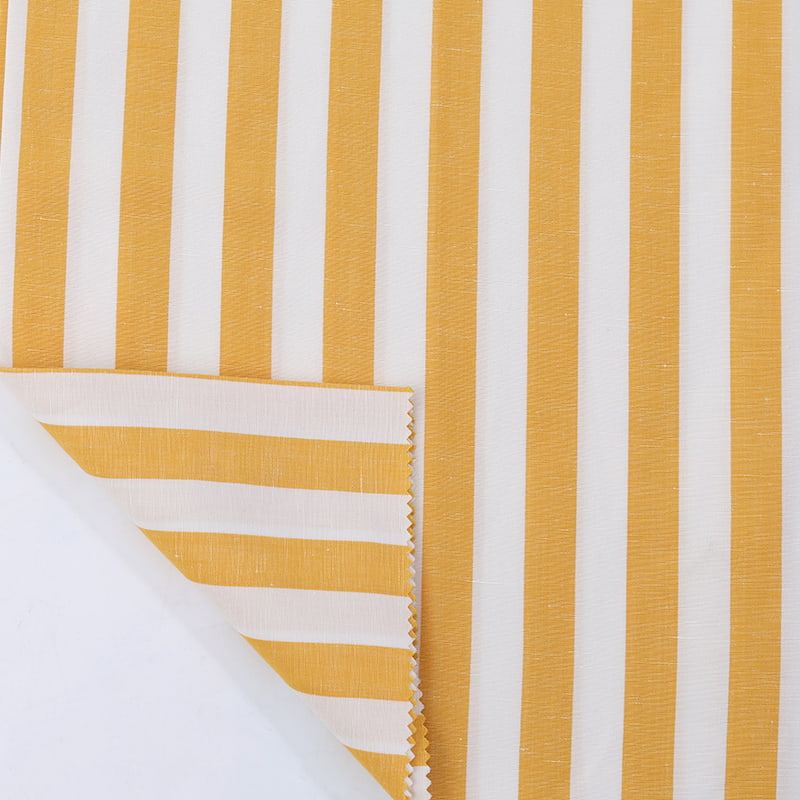
Linen Fabric: The Definitive Guide to Nature's Most Sustainable Textile Linen fabric stands as the most breathable, durable, and environmentally su...
READ MORECompany
Nantong Tianzhu Textile Co., Ltd
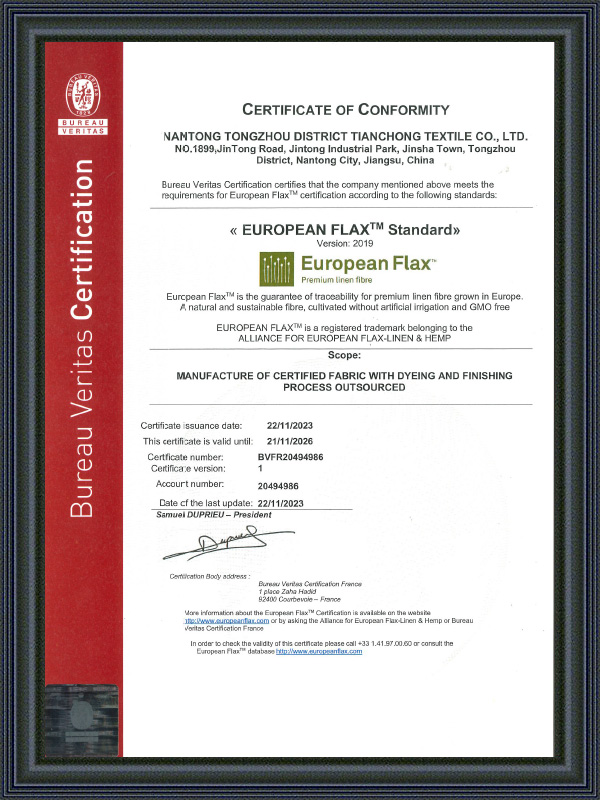
As China Warp Knitted Lining Fabric Manufacturers and Woven Lining Fabric Factory, Nantong Tianzhu Textile Co., Ltd is a professional enterprise engaged in diversified clothing lining fabrics and embroidery accessories. Our products include non-woven lining fabric, woven adhesive lining fabric, hydroentangled lining fabric, circular mesh lining fabric, warp knitted lining fabric, horsehair lining fabric, and embroidered lining fabric. We also provide high-quality materials such as non-woven fabric and plush base fabric. The company has obtained Oeko Tex Standard 100 certification and is committed to quality, sustainability, and innovative development.
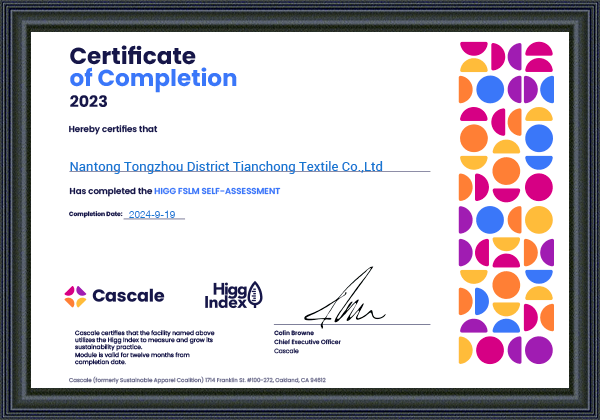
Certificate Of Honor
News
-
-
In the realms of high-end fashion design, premium upholstery, and structural textile engineering, the choice of material construction dictates both ...
READ MORE -
What is flannel fabric, in plain terms? It's any cotton, wool, or synthetic textile that's brushed or left unbrushed to create a soft, insulating su...
READ MORE -
The Technical Superiority of Twill-Woven Flannels In textile manufacturing and commercial apparel sourcing, twill flannel fabric represents the ideal...
READ MORE -
Poplin Is a Workhorse Fabric – Here’s Why Poplin fabric delivers a rare combination of durability, breathability, and a crisp hand feel that makes it...
READ MORE
Message Feedback
Products Industry knowledge
Does the Woven Adhesive Lining Fabric Have the Properties of Being Washable and Dry-Cleanable?
Basic Characteristics of Woven Adhesive Lining Fabric
Woven adhesive lining fabric is an important auxiliary textile widely applied in garment manufacturing, particularly in structured clothing pieces such as collars, cuffs, plackets, waistbands, and front panels. Its primary function is to add stability, shape retention, and structural support without compromising comfort. As a manufacturer specializing in diversified lining materials, Nantong Tianzhu Textile Co., Ltd. produces woven adhesive lining fabric through precise weaving processes combined with adhesive coating technologies. This type of lining is usually made from polyester, cotton, or blended fibers, which determine the fundamental behavior of the material when exposed to washing or dry-cleaning treatments. The uniform weaving pattern and controlled adhesive distribution both influence its dimensional stability and performance during garment care.
Washability of Woven Adhesive Lining Fabric
Whether woven adhesive lining fabric can endure washing largely depends on fiber composition, adhesive type, and coating method. High-quality woven adhesive lining fabrics, such as those provided by Nantong Tianzhu Textile Co., Ltd., typically use adhesives designed for repeated laundering without detaching or distorting. Washability also relies on the bonding strength formed through heat pressing, which must be sufficient to maintain adhesion even when exposed to mechanical agitation and moisture. The fibers used in woven construction further influence shrinkage control, helping the fabric maintain structure. When textile engineers select adhesives, they consider the temperature and pH levels commonly encountered in household and industrial washing. As a result, many woven adhesive lining fabrics used in modern apparel can be washed while preserving their supportive properties, as long as the washing method follows suitable technical guidelines.
Dry-Cleanability and Solvent Resistance
Dry-cleaning introduces a different challenge because garments are exposed to organic solvents rather than water. The adhesive used in woven adhesive lining fabric must withstand these solvents without softening excessively or losing bond strength. Nantong Tianzhu Textile Co., Ltd. incorporates adhesives tested under dry-cleaning environments to ensure that the lining fabric retains its stability during solvent agitation. Fiber composition also plays a role, as polyester-based woven lining fabrics show reliable compatibility with dry-cleaning solvents. Exposure to heat during pressing and finishing contributes to long-lasting bonding performance. By balancing resin formulation, surface coating thickness, and fabric porosity, manufacturers enhance dry-cleanability and help ensure that the lining does not blister, bubble, or delaminate during repeated professional garment care.
Influence of Adhesive Coating Technology
The adhesive applied to woven lining fabric significantly affects its washability and dry-cleanability. Nantong Tianzhu Textile Co., Ltd. utilizes coating technologies designed to provide uniform adhesive distribution, helping ensure that the bond remains consistent throughout the fabric surface. Hot melt adhesives and resin formulations are engineered to resist detergent chemicals and dry-cleaning solvents. During the garment fusing process, proper temperature, pressure, and time settings are critical to achieving optimal bonding strength. If bonding is insufficient, washing or dry-cleaning may weaken adhesion. Through ongoing technological development, adhesive coating processes continue to improve garment longevity while meeting evolving care requirements across apparel categories.
Application Scenarios Requiring Washable and Dry-Cleanable Lining
Garments that require both washability and dry-cleanability include business shirts, dresses, uniforms, and formalwear. The woven adhesive lining produced by Nantong Tianzhu Textile Co., Ltd. supports these applications by providing balanced softness, stability, and care compatibility. For high-end garments, dry-cleanability is particularly important because it helps preserve fabric quality while extending garment life. In casual garments or items frequently laundered at home, washability ensures that the lining retains its structure across numerous washing cycles. Apparel manufacturers assess garment use scenarios to select lining fabrics that meet corresponding care expectations.
Material Selection and Quality Control in Production
To achieve stable performance during washing and dry-cleaning, manufacturers must control raw material quality, manufacturing parameters, and adhesive formulations. Nantong Tianzhu Textile Co., Ltd. integrates quality management systems to ensure that each batch of woven adhesive lining fabric meets structural and functional requirements. Testing procedures include laundering simulations, dry-cleaning solvent exposure tests, adhesion strength evaluations, and dimensional stability assessments. These measures confirm that the fabric will withstand real-world garment care conditions. Proper inspection during manufacturing helps reduce issues such as bubbling or peeling that may occur when adhesive bonds weaken under moisture or solvents.
Final Considerations on Durability in Garment Use
The washability and dry-cleanability of woven adhesive lining fabric depend on a combination of material engineering, adhesive formulation, and garment manufacturing techniques. With precise production processes and suitable material selection, woven adhesive lining fabrics from companies like Nantong Tianzhu Textile Co., Ltd. demonstrate reliable performance in both care environments. When incorporated correctly into garments, these fabrics contribute to shape retention and structural support while aligning with the washing and dry-cleaning habits expected across different clothing categories.
Does the Warp Knitted Lining Fabric Offer Good Breathability and Comfort?
Fundamental Characteristics of Warp Knitted Lining Fabric
Warp knitted lining fabric is widely used in the apparel industry because of its stable structure, smooth surface, and reliable performance in various garment applications. Unlike weft-knitted fabrics, warp-knitted materials use a vertical loop formation process, which allows for enhanced dimensional stability and consistent texture. Nantong Tianzhu Textile Co., Ltd., a manufacturer specializing in non-woven lining fabric, hydroentangled lining fabric, circular mesh lining fabric, woven adhesive lining fabric, horsehair lining fabric, and embroidered lining fabric, also produces warp knitted lining fabric designed to meet the diverse requirements of modern clothing production. Its structure, yarn selection, and knitting density all contribute to the breathability and comfort experienced by the end user.
Breathability of Warp Knitted Lining Fabric
Breathability is one of the essential performance indicators for lining materials used in garments such as jackets, suits, dresses, and sportswear. Warp knitted lining fabric achieves balanced breathability through its loop configuration, which naturally forms micro-gaps within the textile. These micro-gaps allow air to circulate between the inner garment layer and the wearer’s skin. The breathability level depends on fiber type, yarn count, mesh openness, and knitting tension. Nantong Tianzhu Textile Co., Ltd. adjusts these parameters during production to ensure that air permeability matches the intended use of the garment. For instance, lighter warp knitted linings made of polyester or nylon filaments allow higher air movement, contributing to a cooler wearing experience.
Comfort Features Supported by Warp Knitted Structures
Comfort in lining fabric involves multiple factors including touch, flexibility, moisture transport, and thermal management. Warp knitted lining fabric provides a smooth and steady texture that reduces friction against the skin or inner garment layers. Its structure enables moderate elasticity, allowing the fabric to adapt to body movements without creating stiffness. Because the loops in warp knitting are interconnected in a vertical direction, the fabric remains flat and stable while retaining a soft hand feel. Nantong Tianzhu Textile Co., Ltd. selects fibers that reinforce comfort, such as fine-denier polyester, which increases softness and reduces weight. Such features make warp knitted lining fabric suitable for garments that prioritize wearer comfort in daily use.
Fiber Selection and Its Influence on Comfort
Fiber selection plays a major role in determining the overall breathability and comfort of warp knitted lining fabric. Polyester filaments are commonly used because they provide consistent strength, wrinkle resistance, and controlled moisture absorption. Fine-denier polyester further improves tactile softness and airflow efficiency. In some cases, nylon filaments are incorporated to enhance smoothness and air permeability. Nantong Tianzhu Textile Co., Ltd. adjusts fiber combinations to match garment performance requirements. The company’s experience in producing various lining fabrics enables the optimization of fiber properties and knitting parameters to achieve reliable comfort for both formal and casual clothing.
Structural Stability and Its Contribution to Wear Comfort
Warp knitted lining fabric maintains structural stability due to its loop arrangement, which prevents excessive deformation under stress. This stability helps the lining maintain a clean drape in garments, contributing indirectly to wearer comfort by preventing bunching or shifting. A stable lining layer ensures that the outer garment maintains its intended silhouette. This is particularly beneficial in outerwear and dresses where garment movement must remain controlled. Nantong Tianzhu Textile Co., Ltd. implements strict quality controls to ensure that loop tension, yarn alignment, and knitting consistency remain uniform across batches, contributing to comfortable long-term use.
Moisture Management Capabilities
Moisture transport is another important factor related to comfort. Warp knitted lining fabrics generally show controlled moisture movement because the spaces between loops allow vapor to escape. While they do not wick moisture as rapidly as technical sports fabrics, they provide adequate moisture diffusion for everyday clothing applications. In garments where moisture control is more critical, warp knitted lining fabric can be paired with circular mesh lining or other moisture-active materials. Nantong Tianzhu Textile Co., Ltd. evaluates moisture performance during production to ensure that lining fabrics support garment breathability under typical wearing conditions.
Practical Applications in Garment Production
Warp knitted lining fabric is widely used in lightweight jackets, spring and autumn coats, dresses, and sportswear due to its combination of breathability and comfort. Apparel manufacturers choose this lining when they require a stable but comfortable inner layer. Because the fabric drapes smoothly and adapts well to different garment shapes, it is suitable for both structured and relaxed-fit clothing. The production expertise at Nantong Tianzhu Textile Co., Ltd. allows customization of warp knitted lining fabrics based on thickness, yarn selection, and air permeability, enabling designers to match lining properties with garment function.
- Get In Touch
-
- Address: 1899 Jintong Road, High tech Industrial Park, Nantong City, Jiangsu Province.
- Tel:+86-513-86326698
- Fax:+86-513-85260623
- Phone:+86-15371981208
- Email:[email protected]
- Quick Link
- Manufacturing
- Company
- Support
- News
- Contact
- Category